Category Archives: Review

Dragon Head review: Get your mind out of the gutter!

Dragon Head review: Get your mind out of the gutter!
By Dark_Laharl
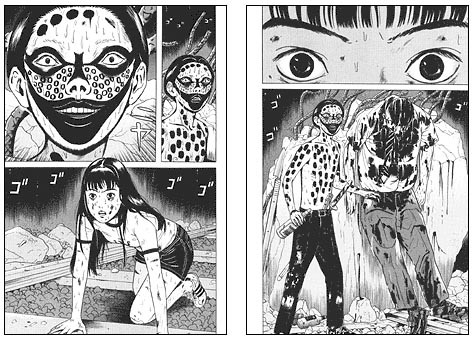
Dragon Head is a post-apocalyptic disaster manga by Minetaro Mochizuki which ran from 1995-2000. It was published in the US by Tokyopop for a total of 10 volumes. Dragon Head is shrouded and mystery and builds so much suspense you’ll never be able to predict what will happen next.

Dragon Head starts out with a class on their way back from a school trip. As the train they are riding goes into a tunnel, disaster strikes. The train derails and the entrance and exit of the tunnel has been sealed off.  Teru, Ako, and Nobuo must survive the darkness of the tunnel where there is danger nearly every step of the way.

The characters develop in an interesting way as the series progresses. Fear plays a major role in the manga as Teru often wrestles with his fear and ultimately over comes it. He’s your average male protagonist who steps to the plate when the situation calls for a hero. Ako also develops along the same lines as Teru except her fears make her sleepy. She often falls asleep at odd times but as the story progresses she is able to suppress her fatigue. During their journey through the tunnel, Teru and Ako develop a deep bond with one another making Dragon Head a survival romance story.

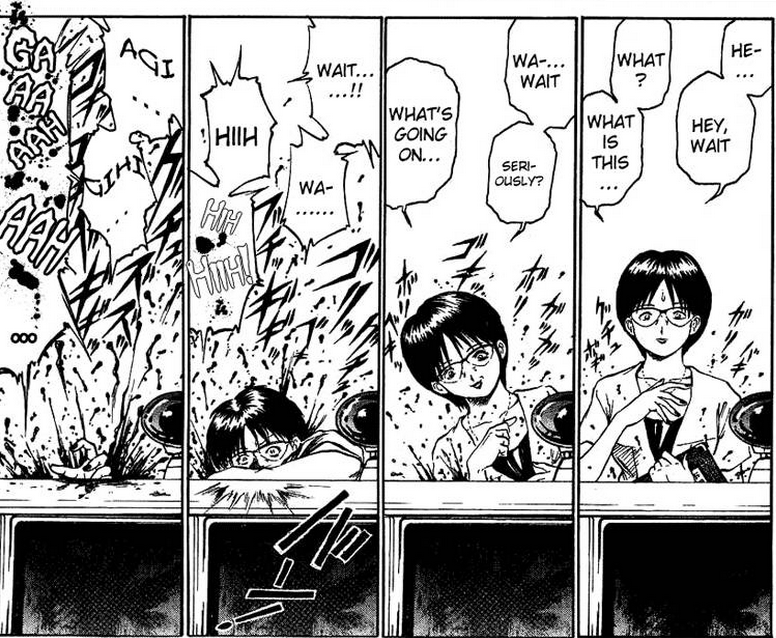
 The art style of the manga is seinen style. Although there is a lot of death in the manga there is not an insane amount of gore. Mochizuki allows the horrors to reveal themselves through the story rather than overwhelm the reader with absurd amounts of disturbing graphics.

Overall I liked the manga, the mystery kept me reading wanting to know what exactly happened to the world of Dragon Head. Some of the explanations are neat to consider but a true cause for the catastrophic events is never really discerned. I definitely recommend this manga, its real page turner. Check it out and tell me what you think happened in that world.

UZUMAKI (Spirals Ate My Neighbors) Review

UZUMAKI (Spirals Ate My Neighbors)
By Dark_Laharl

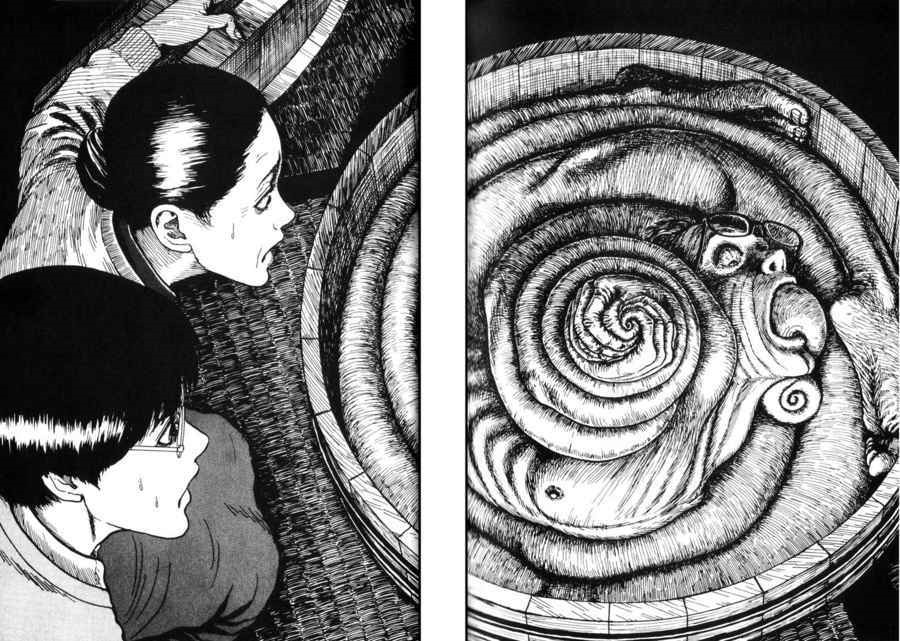
Uzumaki by Junji Itois a seinen horror manga with a good amount of gore, scary images, and nightmare inducing stories. I ran into Uzumakia while back and I was instantly drawn in to the story and, I have to admit, I did have nightmares about the stories I read.

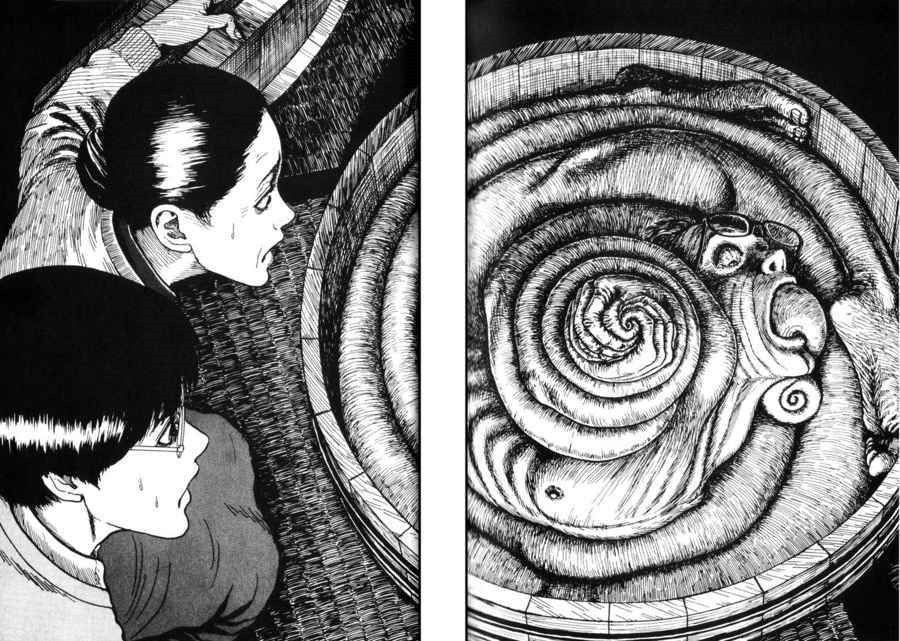
Uzumaki is presented as short stories where horrible things happen to the main characters but has an overarching story line that ties the manga together toward the end. A curse looms over Kurôzu-cho (黒渦町 Black Vortex Town; people become obsessed with spirals and are consumed by them. People want to become a spiral, spirals bring bad fortune, or sometimes someone is absolutely mangled in a car crash and turned into a spiral only to come back and chase someone they knew. (That one in particular got to me, that’s the one I had a nightmare about.)  

The curse brings horror to everyone.  The story is overall serious, with some comical moments where the characters seem to get used to the horrors they are seeing and are like “Yo, cut that shit out man! Stop twisting into a tornado and merging with that other person doing that” (trust me it’s a long story)

I liked all the stories within Uzumaki and the overarching story is pretty good too, the ending left me wanting more than what was given. If you like getting scared in a deeper way than just watching someone get killed or being chased by the killer, than I definitely recommend Uzumakito you.

Forza Motorsport 6 Review

Forza Motorsport 6 Review
By UNDED

            The latest installment in the Turn 10 developed franchise, Forza Motorsport 6, now brings the series water effects, better driving physics, and enough content to have you playing this game until the next Forzais released. There are three major racing modes: a highly extensive single player campaign, an enormous multiplayer mode, and showcase events that challenge you to battle it out in specific divisions with specific cars. You won’t need DLC for the game because the game is chock full of content, buy you’ll still want it anyway.

            To start off, this game is gorgeous. All the cars from Holden to Hummers are recreated in the most excruciating detail down to headlight shine, rim shimmer, and the sun getting in your eyes. As your car gets damaged (and it will), the paint degrades and the body morphs into a twisted heap of metal racing around the track. The graphics are ever more present when you customize your car with decals and special paints and thanks to a copy/paste tool you’ll never have to guess if your decals match on both sides. Included is a Photo Mode that lets you stop the race whenever you see fit and take a sweet pic of your car with various filters and lighting effects.

            The music itself is nothing special. It never hyped me up in a race, and sometimes reminded me more of an aviation game than anything else. More often than not, I would just put on my headphones and let my Spotify playlist do its thing. The sound effects, however, are a completely different story. Hearing the engine of my dream car (the Dodge Viper) roar to life in my first race gave me chills. Not just a beautiful sound effect, tires squealing will actually help you to recognize when you’re pushing the gas too hard, or braking too soon. As you pass by the finish line in your laps, you’ll also hear the crowd cheer you on.

            Seeing as how Forza was Xbox’s answer to compete with PlayStation’s Gran Turismo, physics have always played a big part in the series. Here, Turn 10 has pulled all the stops. Racing on a regular track is hard enough, especially when you’re just starting to get the feel for things. I don’t play racing sims too often so this was something I had to get used to, but after a couple hours I was comfortable enough that I could start tuning my car. You can change the alignment of your suspension, the stiffness of the springs, and the downforce of the front and back of your car individually –tuning can get extremely extensive. Even so, I never felt that I couldn’t win a race if everything wasn’t tuned just right. In fact, all I ever “tuned” was the tire pressure. That’s right, the tire pressure alone meant the difference between 5thplace, and lapping the last few cars to take home 1st. I laugh to think just how much of a difference that would make on a real track, but maybe it does. Turn 10 has put so much detail into everything else in Forza for the past 10 years, I’d hate to think they’re exaggerating their seriousness for the sport. Still, tuning matters. Even with a “perfect” tune, the tracks are a “whole ‘nother beast” of their own. The first time I raced a wet track was the most horrific thing I endured in a racing game. The track was wet so I wasn’t trying to go too fast. As I was coming to a turn I saw a puddle of water in the road. Being the cautious man that I am, I took my foot off the accelerator and lightly tapped on the brake. Wrong. My car hydroplaned and sent me into the wall at 80mph. The state of the track can be a huge help as well. In one particularly memorable race, I started off the line and was in the back as usual, until the first turn when I hit a small pile of dirt scattered across the road. The dirt actually helped me to slide into the turns. One second I had grip, then I’d hit the dirt and lose as much traction as I needed, just to grip the road again and leave my opponents behind. I must have raced that track for an hour because I was having so much fun.  

The single player career mode has no story to speak of, and that’s ok because this is a racing sim. The focus is not on the driver, but the gameplay. Thankfully, this is where Forza shines the brightest. The career mode will take you through various disciplines of racing including super street, grand touring, all the way up to ultimate motorsport. However, because of the Showcases mode, you don’t have to wait until your 70thhour into the game to race Formula or Super cars. As you progress through the story, Showcase mode unlocks different types of races. The first of which is a formula race around the Daytona Speedway. Truly exhilarating. In Showcase mode there is a sub-selection of races named “Moments in Motorsport” that focus on time-period specific cars. This is where I have to give all my respect to Turn 10. Here, they have paid homage to the pre-war birth of Grand Prix, classic American muscle, and even vintage experimental prototypes  
Despite the soundtrack falling short; the gameplay, customization, and fun you’ll have makes Forza 6 a must own. Whether you’re a racing sim pro, or are a casual racing fan like me, Turn 10 has you covered. Two weeks into the game I’ve spent so much time with it and have just barely scratched the surface. I haven’t even had time to test out the split screen mode yet. With all the modes, cars, and built in features, Forza 6 is one of the few games this year that I can say with complete honesty is worth the sticker price.

Bio Meat: Nectar Manga Review

Bio Meat: Nectar Review
By Dark_Laharl

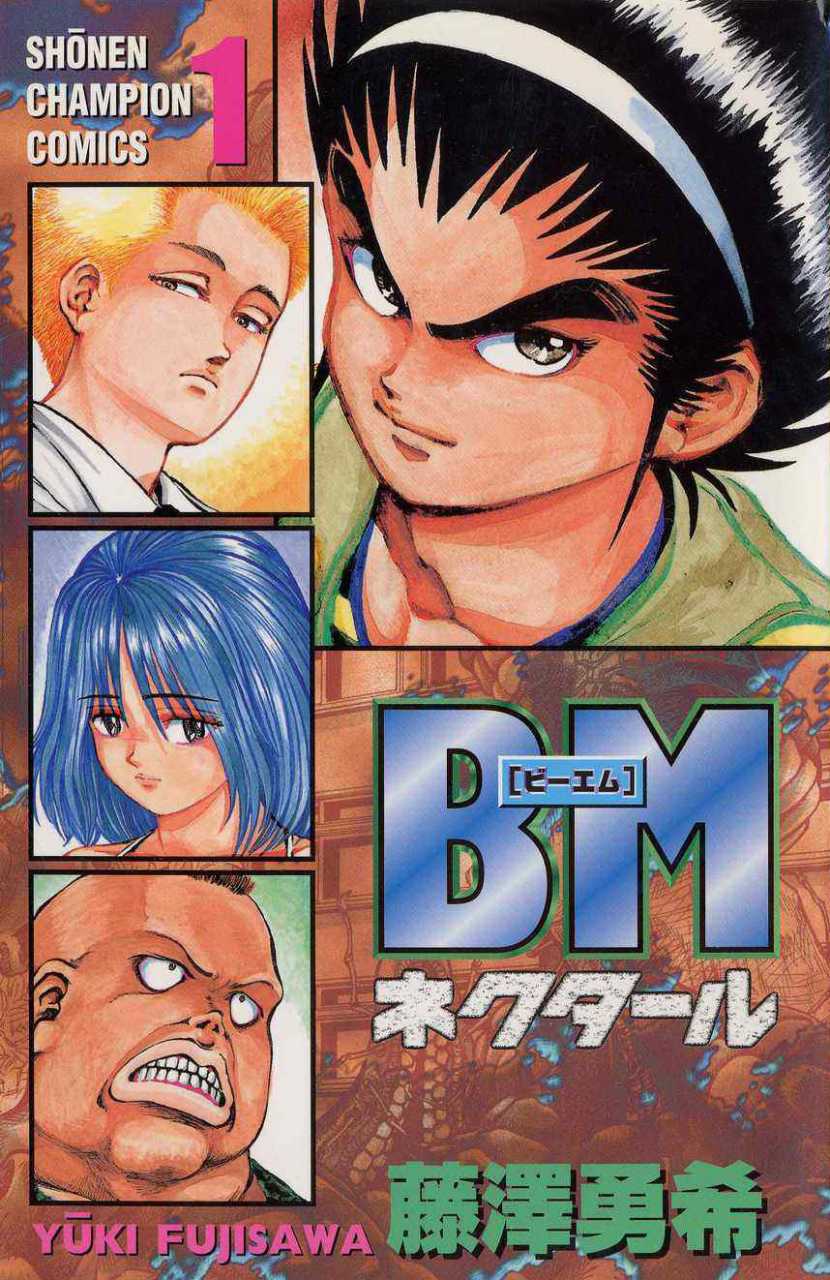
Bio Meat: Nectar is a survival horror manga written by Fujisawa Yuki. It was released in 2000 and ran for 12 volumes. The manga as a whole is split into 3 arcs following the protagonists through childhood, adolescence, and adulthood. Fujisawa’s message through the series is evident: science doesn’t necessarily have the correct solution.

In the future, when hunger plagues humanity and garbage overflows from landfills, Japanese science finds a solution by creating a creature that consumes everything except glass and metal. These creatures are called Bio-Meat, or “BM” for short, and  are kept in a dome where they feast on Japan’s garbage. Once fed, they are gathered, slaughtered, and sold to be eaten by humans. What could possibly go wrong?

The government can’t hope to plan for all contingencies.  The BM escape and consume everything in sight –including humans. Citizens must run for their lives or be eaten by these horrendous, man-made monsters. To avoid spoilers, I will only say this happens three times overall, and the last time is by far the worst outbreak.

Japanese BM


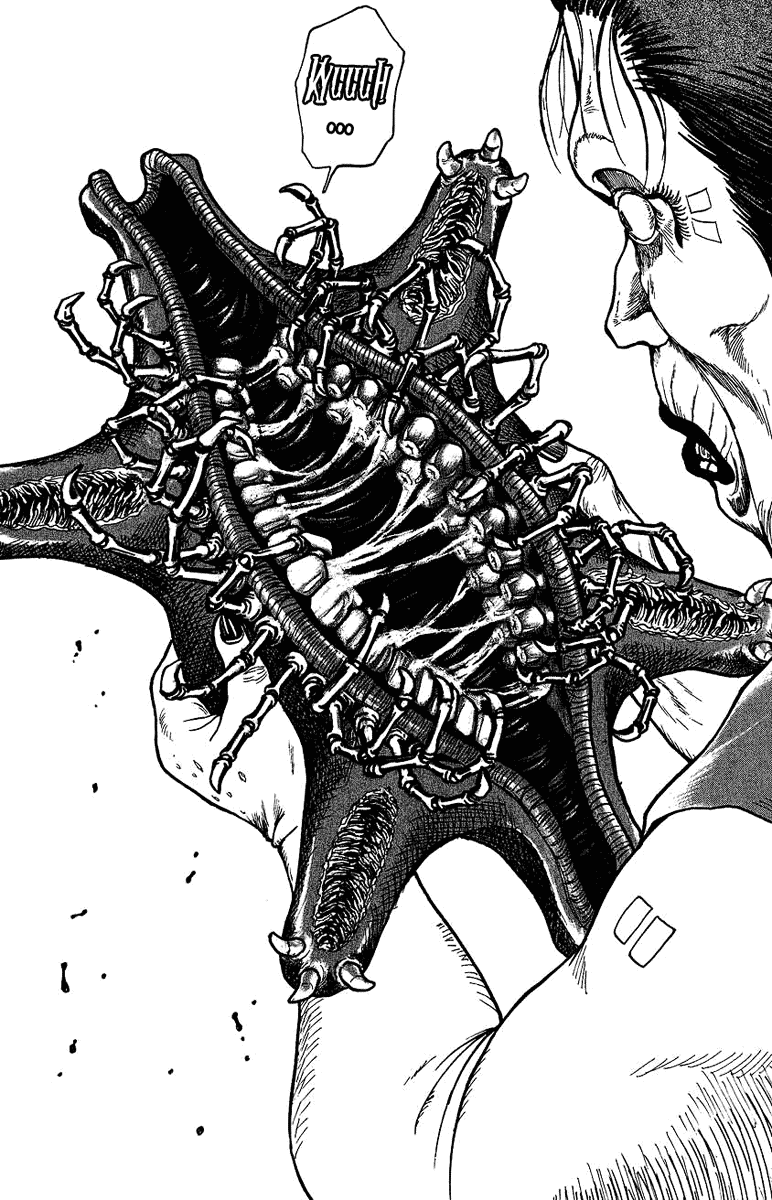
I enjoyed the story that Bio Meat: Nectar has to offer. If you have not read any horror manga before, Bio-Meat: Nectar is a good introduction to the genre. The “gore” scenes in Bio Meat are not too graphic, although, the underside of the BM itself (the Japanese BM) is slightly disturbing. The entirety of it looks like a little black turtle with two heads, no eyes, and a giant vertical mouth with human like teeth on its underbelly. From the side of the mouth are weird appendages that look like thin skeletal spider legs that the BM uses to scoop things into its mouth. Stuff of nightmares or at the very least very uncanny valley. What is that? Four mini mouths on each of its legs as well? The hell?

USBM eating a poor soul


The American BM is much different than the Japanese BM and I am not quite sure how to describe it. The best description I can give is a mouth attached to a bunch of tentacles. I don’t even know how the Americans cut the thing up to make it look like steak, come to think of it how do they cut original BM into steak? This is never really addressed in the series.

The art style of Bio Meat: Nectar is very akin to most horror manga; it does its best to look as realistic as possible but sometimes over exaggerates facial expressions and violence to depict the grotesque nature of what happens throughout the manga.

Stupid lady, you’re getting eaten!


The series follows four characters. Maaya, arguably the  main protagonist of the story, is a self-proclaimed bad boy who acts out for attention and to make new friends but goes about it all wrong. As he grows older, he remains the same, a bit brash at times but can becomes a real hero when he needs to protect his friends and innocent civilians –even at the cost of his own safety.  Banba, the muscle of the group, is introduced as a bully, but later reveals a heart of gold and someone who cares deeply about those he loves. Shingo, the child prodigy full of smarts and solutions, grows with the series  becoming less reserved and caring toward the people around him. Lastly, Marino plays the love interest of the group. Having gone through three BM outbreaks together, she cares about each of the male leads and drops the “victim” role to become a motherly figure toward them.

In Bio Meat: Nectar, Fujisawa proposes the idea that science is a double edged sword.  We see this through the BM; man-made creatures with a lust for devouring everything in sight.  While the BM solve the problem of waste and hunger the creatures themselves are unstoppable monsters. They ravage the city into a near apocalyptic state and the science and technology meant to save humanity endangers humanity instead. In the series, we see scientists pressing forward despite the danger posed to mankind. This concept parallels the world we live in today. Consider genetically modified food.  While we are solving issues of world hunger, the impact to the environment (if not properly controlled) can be irreversible.  What will our food mutate into? What will happen to the planet and humanity when we keep pressing forward and something goes awry on a global scale?
 
If you enjoy horror/apocalyptic stories then this is definitely one to pick up and read. I, personally, would love for this to become an anime at some point especially with the advent of stuff like Attack on Titan which shows people getting eaten. It’s not too far of a step to show the same being done by the little BM’s. Final Verdict: Find it, Read it, ENJOY IT! Let me know what you guys think of it.


Ultra Despair Girls: A hopeful yet despair inducing review

Ultra Despair Girls

A hopeful yet despair inducing review

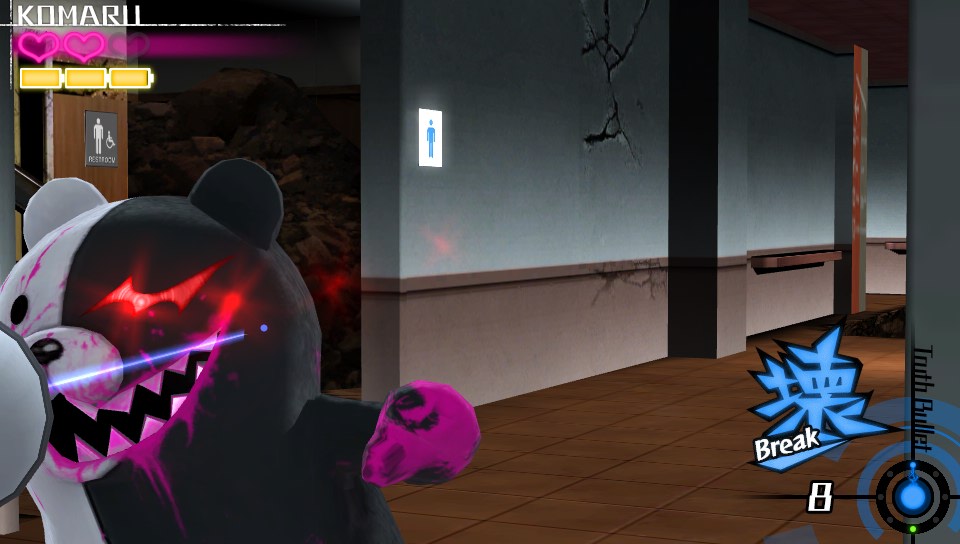
If I had to describe what Danganronpa is, I would say its Battle Royale meets Phoenix Wright. In order tosurvive someone must get away with the perfect murder. The characters go through class trials to be the last one standing in a battle between hope and despair. Unlike the predecessors Danganronpa: Trigger Happy Havoc and Danganronpa: Goodbye Despair which play as visual novels, Danganronpa Another Episode: Ultra Despair Girls for the PlayStation Vita drifts away from the visual novel and plays as an action-adventure game. Class trials are eliminated and now you must blast your way through Towa city, destroying rogue Monokumas (evil black and white bears with a thirst for blood) in order to escape.
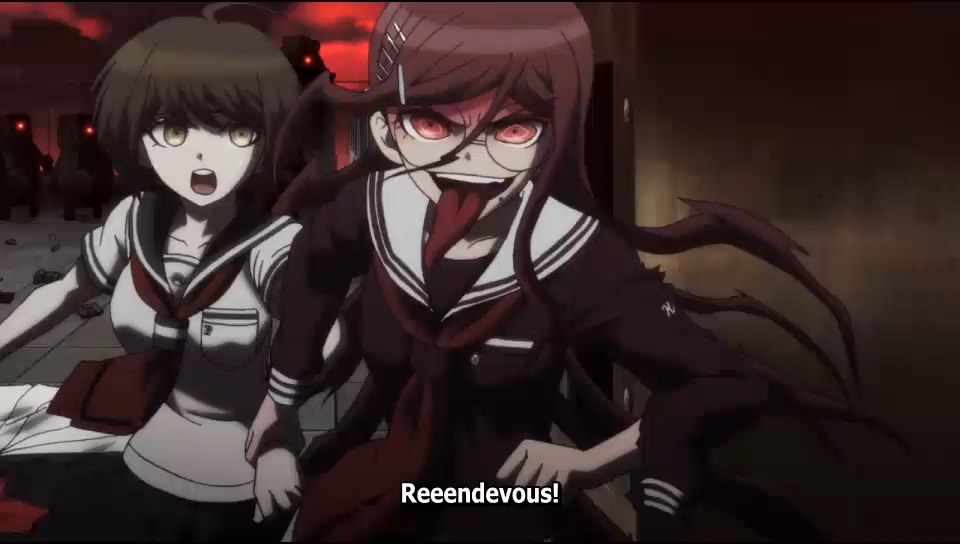
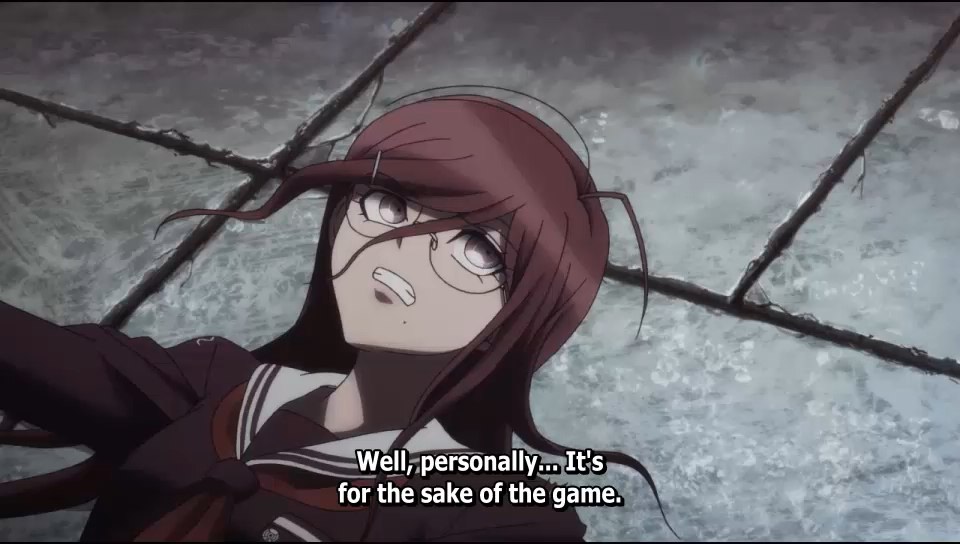
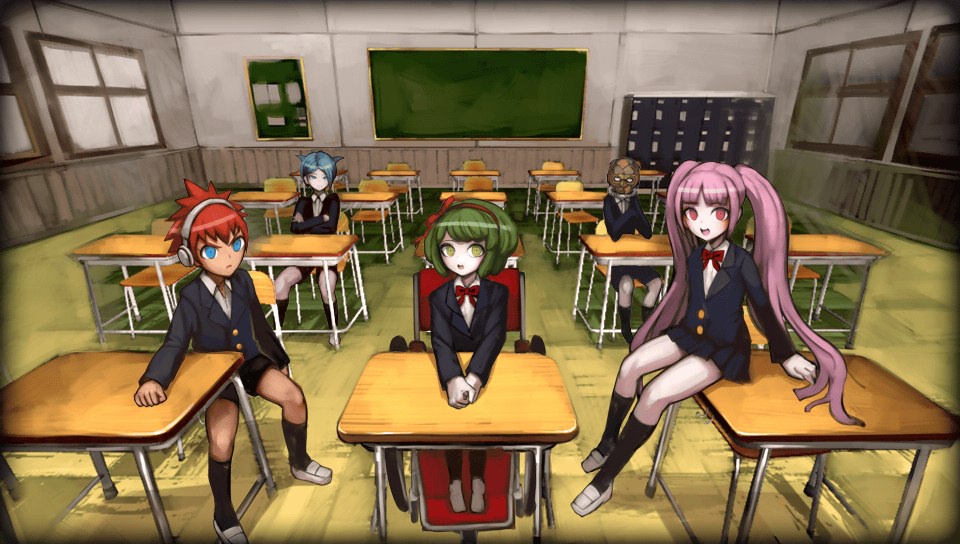
Danganronpa Another Episode: Ultra Despair Girls follows Komaru Naegi who has been captured and imprisoned in an apartment for unknown reasons. When she finally escapes, Komaru discovers the world has fallen into despair and Towa City has been overcome by riots. Komaru is captured by a group of “Li’l Ultimates” (children from Hopes Peak elementary division), forced to wear a Battle Royale-esque wrist band, and play a twisted game where she must escape from homicidal children out to slaughter every adult in sight. Along with Toko Fukawa (the Ultimate Novelist who shares a split personality with a serial killer called Genocide Jack) Komaru uncovers the mystery behind the riots in Towa City, and how they are connected to “The biggest, most awful, most tragic event in human history” and Junko Enoshima. The timeline of the game takes place between the events of Danganronpa: Trigger Happy Havoc and Danganronpa: Goodbye Despair.
The horrifying notion of children murdering adults is enough to send chills up anyones spine –it’s the perfect concept for a despair inducing scenario that Danganronpa is known for. However, I felt the story line was slightly too predictable.  Of course Toko and Komaru would become friends, and clearly Monoca is the mastermind. In previous games I like how I was jerked around unable to guess “who did it?” The mystery slowly revealing itself through the clues and dialogue is something I look forward to in a Danganronpa game. Ultra Despair Girls, on the other hand, is pretty straight forward:  “The only way to defeat the children is to fight them.  Don’t worry though, you have hope on your side.” Don’t get me wrong, there are still plenty of surprises, but I felt that many of them revealed themselves in obvious ways.
What I love most about Danganronpa is the 2D pop art, however, that has also been eliminated in Ultra Despair girls and almost everything is 3D. This works for the character design, but not so much for the background. While I understand that I’m maneuvering through a city ravaged by despair I felt that the levels were plain and repetitive.  I found myself going through the same hallway, the same factory setting, the same town setting, the same sewer setting over and over again. I often lost track of how far I’d actually gotten in each stage because there was no way to differentiate between the different areas –it all looked the same. There were some levels that do pop, but it is not consistent throughout the game.
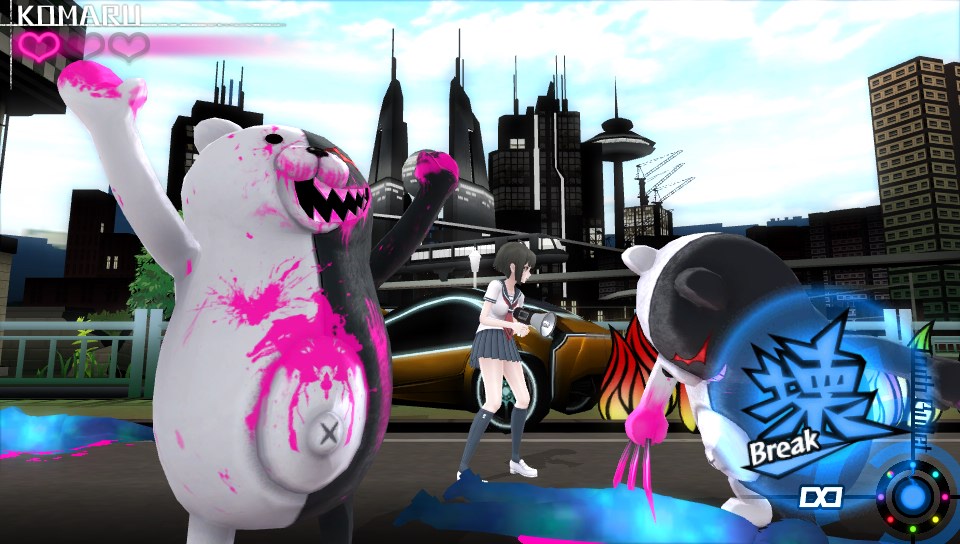
Another steeple of a Danganronpa series is how violence is portrayed. Ultra Despair Girls maintains the same theme.  Pink blood splatter is still a prominent feature and in order to depict the magnitude of violence blue and pink bodies with minimal characteristics portray the adults –dead and alive– throughout the game.  The cruelty of children becomes even more shocking when they jovially dance over and toy with the dead bodies. Sometimes I found myself gasping by the amount of bodies in a location or by how they were positioned by the children —Danganronpa didn’t hold back.
Since Ultra Despair Girls is an action-adventure game you are given the opportunity to blast away hordes of Monokumas with a Hacking Gun loaded with Truth Bullets.  There are different types of Truth Bullets to help you combat different types of Monokumas so when faced with a mob of unending enemies you must strategically plan how to shoot them down.  If you run out of bullets or find yourself overwhelmed, you can switch to Genocide Jack to slice the bears to shreds but her power runs on a battery that will, eventually, run out.   You do not have unlimited ammo so you must plan your shots carefully.  The game also isn’t entirely shooting.  There are a lot puzzles that range from solving riddles to escape a room, or utilizing Truth Bullets to destroy groups Monokumas with a single explosion.
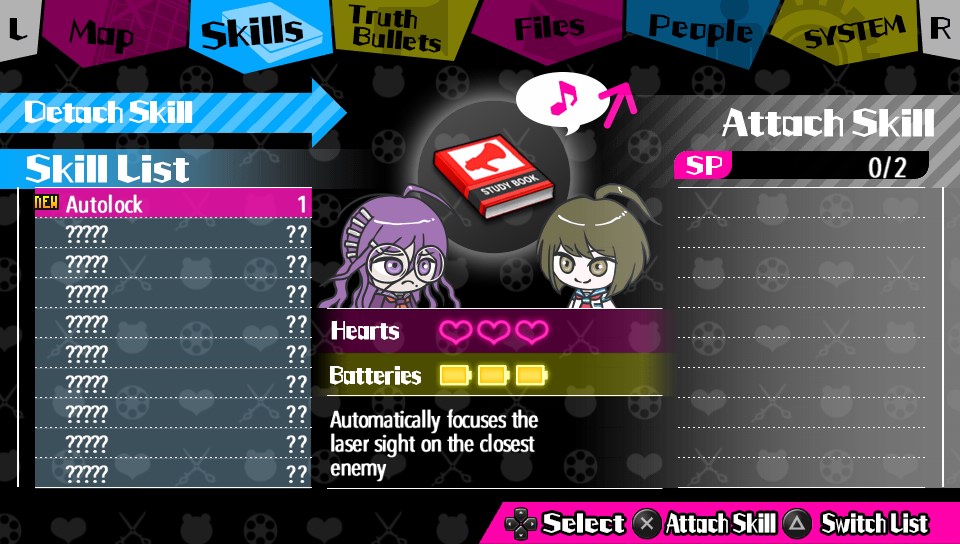
Being able to shoot Monokumas down is loads of fun, but it would have been better if the reticle was easier to control. I found it extremely difficult to aim.  When it looked like I was on the mark, it still took several shots to take down a Monokuma. Of course, you can upgrade your skills and bullets with Monocoins as you level up, but even so, the skill felt like it made no difference.  The reticle control became extremely troublesome when I couldn’t aim it high enough because of the level design.  Despite the reticle hurdle, I felt the game was too easy at times.  Ammo and health dropped continuously throughout boss battles so I never really ran out –I never stressed when my bullets ran low because I knew more would drop. My last qualm with the game is how overpowered Genocide Jack is.  While she is limited by her battery, she can slice through multiple Monokuma and take zero damage when hit. Like health and ammo, batteries are also dropped frequently so most of the time you could just shred through groups of Monokuma with Genocide Jack rather than Komaru.
While Ultra Despair Girls is meant to be action-adventure game I felt that it was too text heavy with far too many cut-scenes.  Every time you found an item Komaru and Toko would have a long conversation over it.  While the cut scenes help develop the friendship between Komaru and Toko, they were extremely long winded.  Although, some of them were fun, especially Toko’s frequent snide remarks and her crazy fantasies of Byakuya.
I might find myself picking up the game again.  Like the previous games, extra content can only be unlocked by purchasing it with Monocoins. Sadly, I used up all of my Monocoins in the game buffing up my Hacking Gun.  Although I have quite a few issues with the game play, I think Ultra Despair Girls fits nicely, story wise, between Trigger Happy Havoc and Goodbye Despair.
Have you played a Danganronpa game before? Which one is your favorite? Let us know!